Tuesday, March 27, 2012

Intel's IGP evolution: Ticking and tocking its way to the mainstream


I can still remember the day when I came across the term "bottleneck" for the first time! It was not that long ago- I was stuck with my Pentium IV powered PC which won't run most of my favourite games of that time. Back then I was just a clueless student and thought my CPU was the culprit. But that was not the case as one of my better 'informed' friends rightfully indicated toward my iGPU (Integrated Graphics Processing Unit) which happened to be the lackluster (even by the standards of that time) Intel Extreme graphics. Even though my CPU wasn't the best in class, it still could run those games but my inbuilt graphics was the limiting factor or "bottleneck" as the term implies. Of-course I could've bypassed the whole scenario by simply switching to a separate video card or dGPU (Discrete Graphics Processing Unit) but that would require more space, more power, more hustle and surely more spending which I couldn't afford. This pretty much was the story with most systems back then and while the integrated graphics parts were sufficient to drive the 2D desktop components and images, 3D workloads were beyond both their purpose and capacity. Since then a lot of things have changed in the world of personal computing, but it is only recently that the IGP performance of mainstream PC's has reached a level which is more or less acceptable not only in terms of general computing but also gaming. Today, we'll have a quick look at how Intel's graphics solutions have evolved over time.

Thursday, March 15, 2012

New Cedar Trail Netbooks: Not quite the upgrade you wanted

ASUS Eee PC

After Intel announced the Cedar Trail line-up as a much needed update to its low power Atom CPU back in 2011, it was just a matter of time before the OEMs (Original Equipment Manufacturer) started to ship new Netbooks and Nettops based on these new chips. And that's exactly the case as there are reports of new Netbooks/Eee PCs from around the web. ASUS has always been among the forerunners when it comes to this segment with its fast product launch and consistent updates, so no wonder there to see them offering some of these Netbooks. We also expect the other usual suspects like Acer, MSI and Samsung to follow soon. These look like fine little PCs and I'm sure the OEMs will do their part to make these even more attractive. But what intrigues me is the new Cedar Trail Atom CPU that seats right in the heart of these Netbooks. Let's take a closer look.

Friday, March 9, 2012

Microsoft offers coloful redesigns: (and) It's not Win8 we're talking about!

Keeping up with the spirit of Holi, I was looking for something that has, well, lots of vibrant color and a bit of grandeur to it. Luckily enough the tech-world is ripe with such devices and it only took a little bit of searching to discover that it's not just the Windows 8 developer team from Microsoft that has been working hard recently! Yes, Microsoft has a hardware team too and those guys are equally competent when it comes to delivering quality products, namely Mice, Keyboards and Webcams. These peripherals from MS tend to have good build quality and ergonomics and also represent good value for money. Actually its Arc and Touch

Tuesday, March 6, 2012

Radeon HD 7870 and 7850: Pitcairn is the new performance-mainstream GPU


As you've already guessed, AMD's graphics division wasn't going to sit idly with just its flagship Radeons (HD 7970/HD 7950) being released. In order to capture the whole market one needs cater a full range of products. That's exactly what AMD has done this time around with a flurry of new product launches. First out was the Cape Verde based Radeon HD 7770, followed by HD 7750. These two GPUs are targeted toward the mid range-performance segment with a focus on power and thermal efficiency. Reviews have already shown that Cape-Verde based GPUs are, while built on the same efficient and powerful GCN (Graphics Core Next) architecture, not a direct successor to the existing Radeon HD 6870/6850 line-up. Mainly in terms of shader performance and memory bandwidth as the Cape-Verde design only gets 10 GCN CUs (Computing Units) which equates to 640 SPs (Stream Processors) and a 128-bit memory interface. So it was clear that AMD needs to address the apparent performance gap between its flagship Tahiti based GPUs (HD 79xx) and Cape Verde (HD 77xx) based ones. So enters Pitcairn with 1280 SPs and a 256 bit wide memory bus- to claim the performance-mainstream crown. We'll try to analyze how this new GPU from AMD fares in its endeavor.

Tuesday, February 28, 2012

Skyrim creation kit: Modders' delight


The Elder Scrolls V: Skyrim needs no introduction to the computer gamers as by now it's considered to be one of the best RPGs ever made. Many avid followers of this genre have been waiting for a long time, 5 years to be more precise, to relive the magic created by Bethesda Studios. The developers had a very difficult task in their hands- to make a worthy sequel of what many regard to be the most popular action RPG franchise of all times. But when Skyrim launched in November, 2011, it not only met the expectation of gamers worldwide but for many also set the bar for free-flowing RPG excellence, just like its acclaimed predecessors. The internet is flooded with reviews (like this one) that can't praise the game enough and would've given a feel of being biased if not for the seer number of such reviews!

Friday, February 24, 2012

VIA EPIA motherboards: Quad-core solution in mini-ITX form factor


Remember VIA? The only other company that provides x86-compatible microprocessors and platforms except Intel and AMD? Yes, although VIA is no longer considered to be a force in the mainstream PC (desktop/laptop) arena, it has managed to survive in other market segments like the embedded devices. Many tend to forget that the viability of x86 based solutions extends beyond performance computing and that there is large market of industry specific devices, namely- digital signage, kiosk, sales automation and media application devices etc. VIA is a major player in this market and delivers efficient, affordable products. VIA technology's latest offerings are two new mini-ITX mainboards, named EPIA-M900 and EPIA-M910 respectively, which are additions to the already existing EPIA series of mainboards. Mini-ITX is an Interesting choice for form factor as this is not your usual ATX or micro-ATX motherboard, but looking at the targeted market of embedded sectors- this pretty much makes sense. More interestingly VIA offers a choice of combining its own quad-core E-series processors, which scale up to 1.46+ GHz and have 4MB L2 cache, with these boards.

Wednesday, February 15, 2012

Microsoft India store got hacked: Bad news for many reasons


In a somewhat bizarre and embarrassing turn of events, it is reported that the Microsoft Online Store in India got hacked by a group of Hackers with its online users database in jeopardy. On 12th of Feb, visitors to that site was for a shock when they saw the main page was displaying a masked face (Anonymous style!) on a dark background, instead of the usual weekly offers! The hacker group responsible for this calls itself "Evil shadow Team", an outfit we haven't very much heard of before. It seems like the owners of the website have regained control since but the site itself is still out of service as at the time of this writing. Anyway, what is of greater concern is that the whole user database including e-mail addresses, user names, pass-words or even physical addresses got compromised in the process. The hacker group claimed that the user database was in form of plain text (!!), not encrypted or secured by other security measures thus making it an easy prey. This is not only embarrassing for Microsoft but also asks questions about methods deployed in maintaining and safekeeping of the site.

Tuesday, February 14, 2012

AMD's plans for future: A new AMD? (Part 2)


So now that we've a overview of the current scenario, it's time we delve deeper into the matter. The challenges that AMD faces right now are different in nature as some are related to its own technical capacity and execution, while others are more generic. We should not expect any revolutionary solution for these generic ones as AMD is not the only company facing them. The recent growth in mobile computing industry is a good example, as many believe it to be a threat to personal computing as we know it.Gone are the days

Monday, February 13, 2012

AMD's plans for future: A new AMD? (Part 1)


Last week AMD (Advanced Micro Devices) held its Financial Analyst Day (FAD) which is basically an annual event to assess, analyze and provide information about the company and its strategy in various market sectors. Generally there are lots of financial tidbits presented and discussed in such an event which are of no concern to the common user, unless of-course one is a stockholder or investor. It's the technical side that attracts people like us because this is where we get glimpses of future products and technologies. Lots of eyes were on this year's FAD and how AMD tackles issues like desktop performance, graphics integration and mobile computing. Finally we've got some very interesting information in our hands and we'll try to analyze those.

Friday, February 3, 2012

Windows XP: Still an OS to recon with


Things are always in a constant state of evolution in the world of personal computing and the speed at which every piece of software, hardware and device evolves is simply mind numbing. Very few can withstand the test of time here and those which can, become milestones of the industry. Microsoft's Windows XP is definitely one of those iconic figures. Earlier we told you about Internet Explorer 6 and how it still endures in many computers world wide and now some latest reports show that Windows XP is still a dominating force in the desktops. According to the numbers shown by this market analyst firm, Win XP enjoys a healthy 47.19% of the total desktop market as of January, 2012. Surprisingly enough, Microsoft's latest and greatest Windows 7 follows behind with a total of 36.40% of the market share while Widows Vista trails even further behind with only 8.22%. We've got another statistics in our hand though which shows Win 7 and Win XP to have 46.1% and 32.6% of the market share respectively, however it's unclear whether this stat consists only of the desktop market or the entire PC market. Whatever the case may be, one thing is clear- Windows XP is still considered as one of the mainstream operating systems by many users across the globe and with good reasons. Unlike IE 6, Win XP still gets official support from Microsoft and will continue to do so until April 14, 2014- a rather long support streak for a decade old operating system. This support includes security updates and patches. Thanks to that, Win XP is not as vulnerable to modern threats as it should be considering its age. Reliability is another plus for XP, built on Windows NT kernel this this venerable OS is considered as one of the most stable version of windows till date. In fact a desktop PC with Win XP can perform most of the everyday tasks we expect from our PC and also it is less demanding on the hardware. One can boot into XP with something like a low power Atom CPU and only 1GB of RAM without any problem and still have all the Windows functionality. XP also has a 64 bit version which can accommodate for more than 4GB of physical memory. If you can manage without advanced features like Aero and WEI, you will be fine with XP. Gamers on the other hand are better served by Win 7 or Vista simply because of Direct-X support. While you can still play Direct-X 9 titles without any issue in an XP machine, if you're looking for DX 10/10.1/11 features you have no way but to upgrade your OS.

Overall Windows XP had a great run and we expect this to continue even further as many users worldwide are simply hardware limited. Many organizations and institutions, that still run XP in their systems, might be concerned with the cost of necessary system upgrade that comes with an OS upgrade. Compatibility of some legacy software might be an issue with some users though there is the "Windows XP mode" feature present in Win 7 for those kind of scenarios. With said that many users are already migrating to a newer version of Windows as we speak and with Microsoft dropping support for XP in 2014, this trend will become more prominent in future. But for now Windows XP is still Good Enough!

Friday, January 20, 2012

Looking back @CES 2012 - The interesting bits

CES (Consumer Electronic Show) 2012 has reached its conclusion yet there are lots of things left over to speculate on. There have been many exciting technologies and gadgets shown in this years event and some of them were truly amazing, others not so much! AnandTech made a full list of things and events that took place over in CES. You can find it here. Check it out, we have some very interesting techs and products ahead of us in 2012. Here is some of my personal favorites among those -


  • AMD Trinity APU - An APU built on Pile-driver cores and 2nd generation DX11 graphics which could very well be the next big thing in integrated graphics. Trinity would be made available by 2nd half of 2012 and should have enough graphics horsepower to make IGP gaming a reality. But a lot depends on how much improvement Piledriver cores/modules bring over Bulldozer cores. Trinty will be an update of the existing Llano line up.
  • Intel IvyBridge CPU and Ultrabooks built on it - IvyBridge will be a die-shrink of the existing SandyBridge CPU architecture from Intel and the first one to utilize a 22nm processing node. This is a very promising chip because the smaller process will allow for better power and thermal efficiency, more headroom for higher frequencies and better graphics. Intel has confirmed now that IB will have DX11 functionality, so no worries there. One thing to note here, while Intel will reuse its existing graphics architecture found in SandyBridge i3/i5/i7 CPUs, the die shrink would make it possible for IB to fit in more graphics execution units than its predecessors thus providing more 3D-gaming power. For a completely new architecture we've to wait for Haswell. Meanwhile Intel has been very active with their big Ultrabook push recently and IB CPUs are a big part of the plan. Intel and its OEM partners has shown off quite a few attractive Ultrabook models based on this new chop in this years CES. The target is to have longer battery life and better graphics.
  • Nokia's new breed of Windows Smartphones - This is a very interesting development that many of us have a keen eye on. It came as a surprise to many when Nokia announced it'll ditch Meego for WP(Windows Phone) and make Smartphones based on Microsoft's Operating System. MS has been hard on work to enter the smartphone business for long but without much success so this collaboration was a very important one for them. Intel seemed to be the biggest loser, Microsoft the prime gainer and Nokia...well only time will tell! Nokia Lumia 800 was the first to show up with WP7 this year and is the best Windows based Smartphone to have. It goes to show Nokia still has what it takes to make great Phones. In CES this year, Nokia has announced Lumia 900 which will be a very interesting upgrade to their Lumia line-up with features like a 4.3" Super AMOLED screen! 
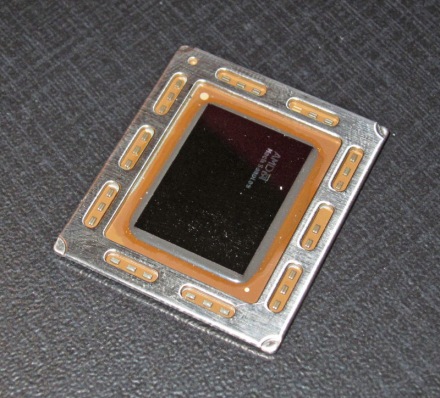
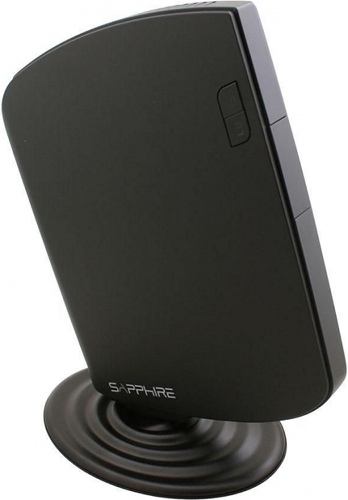
  • Sapphire Edge-HD3 - We all know Sapphire to be a top tier Graphics card manufacturer but did you know that it also makes some of the smallest PCs around? Yes, that's true. Sapphire's Edge-HD series of mini PC/Nettops have been great products. I have one Edge HD2 in my possession for sometime now and love this little PC (yes I call it a PC because it does all the basic tasks a Personal Computer is supposed to do and more) for its style, portability and functionality. It works as fall back device for me aside from being a great HTPC replacement. My only gripe about this little beauty is that it runs on an Intel Atom D525, which is quite underpowered and sluggish in today's standard. Nvidia's ION is what makes my HD2 unique. I was looking for an upgrade and it seems I'll get it soon in form of Sapphire Edge-HD3! This iteration of Edge-HD is built on a very capable AMD E-450 dual-core Bobcat APU with integrated Radeon HD6320 graphics- which should be the perfect upgrade for anyone using an ION based device like myself. E-450 is clocked at 1.65GHz compared to E-350's 1.6GHz , has better graphics to offer and definitely will make a great little PC considering E-350 is already a very good option for building Media Servers, HTPCs, Nettops and Bare-bone PCs.
CES 2012 promised us a great number of enticing technologies and products that will arrive very soon. Actually there are many fantastic tech and gadgets (like Android Icecream Sandwich or those huge Amoled displays!) I would've liked to focus on but being limited of both time and scope, can't right now. But rest assured we, who like to keep a tab of new and exciting technologies, will have our hands full in upcoming months!

Wednesday, January 18, 2012

A dark day @ Wikipedia to prevent a dark future


In an unique attempt to register its protest against the draconian and short-sighted SOPA, Wikipedia, the largest and widely used free online encyclopedia, has blacked and stalled their Wikipedia website. This is not permanent but could very well be the case in future if the USA congress passes the act that is SOPA! In a way Wikipedia is showing us glimpses of that dark future. This is a very serious matter and one that relates to our freedom and integrity. There are some serious flaws in the design and proposal of SOPA/PIPA, which could in effect toll the death bell of a free and boundless internet. The likes of Google,Yahoo, Facebook and PayPal have already raised their voices against this draconian act officially and many more are joining them everyday. You can find a full list of the names protesting SOPA here. But Wikipedia has taken the protest to a new level after today's event. We would like to congratulate them for their efforts as this is not just a concern of USA anymore and everyone from every country in the world should raise their voices about how they want their internet to be in upcoming days. A free and expressive internet is what we all strive for and it is our responsibility to protect the very essence of the internet as we know it. In this small personal blog of mine I try to concentrate on PC technologies surrounding us but under these circumstances I believe we all should learn about the potential threats from SOPA/PIPA and raise our voices against it.

I also found some good articles on this concerning matter, read them to have a better understanding.
http://www.pcworld.com/businesscenter/article/246516/stop_sopa_a_plea_from_the_inventors_of_the_internet.html, http://www.guardian.co.uk/commentisfree/cifamerica/2012/jan/17/stop-sopa-or-web-will-go-dark

Update: Many others including Craiglist, Reddit and Electronic Frontier Foundation also decided to black-out their respective sites. Here is more.